Step 5: Invite Response.
CREATE A Strategic process
We learn from Jesus that blindness often lifts gradually as God removes different blocks to sight. In Mark 8, for example, though the disciples have seen so much of Jesus, he asks them, ‘Do you still not see?’. It takes time for their blindness to lift and for Peter to see who Jesus really is and declare him as the Christ. That’s often the experience of people today—instead of hearing everything in one sitting and believing there and then, faith is often a gradual dawning as people’s ability to see Christ’s grace and truth is restored.
The Because Approach sees the journey to faith as a process. The starting point is what is our spiritual predicament of sin, which leads to death. We’re separated from God with no prospect of being able to bridge the gap by our good works, since no one can never be good enough for God. The good news is that God loves us so much he sent his Son to pay for our sin so we don’t have to. Christ’s death on the cross is the bridge of life that brings us into restored relationship with God.
This assumes that people are staring at the problem of sin and crying out for a bridge back to life in relationship with God. In fact, people aren’t staring at the chasm—and they’re often not even aware it exists. They live for the moment, as if unconcerned with the future and God. The reality is that many people live life thinking there’s nothing to worry about. ‘I’m not that bad, God and I will get along just fine when we meet.’ But it’s a fatal blindness. And, what’s worse, there are barriers that stand in the way of people seeing the truth. The barriers people have to exploring faith are increasingly basic, or further back in their understanding. Rather than asking questions of truth, for many people faith isn’t even a question or is something ‘long gone’ and relatively unknown.
The Because Approach identifies the barriers to faith and starts with people much further back in their understanding and interest:
The isolation barrier. As people live increasingly fluid and busy lives, they become increasingly isolated and lonely. One result of this is that many don’t have meaningful relationships with Christians and therefore have little idea what Christianity is about.
The weird barrier. People often have false impressions of Christians, shaped by various media. The perception can be that Christians are weird extremists or sad individuals who need a spiritual crutch.
The irrelevant barrier. Many reject Christianity, saying, ‘It’s lovely you have your faith but I don’t need it’ or ‘It’s just not my thing.’ Our role is not to ‘make Christ relevant’ but to help people see his relevance in action.
The untrue and cost barrier. People may see the relevance of faith, but they also need to see the truth of Christ and the Bible. Understanding inherent truth, and not just acceptance based on need, is vital in evangelism. When they don’t understand the objective truth of the gospel people hear the message of Jesus but then, like the rich man (Matt. 19:16-22), they walk away when they realize the cost.
The Because Approach helps people move along the journey towards faith by removing each barrier in turn:
Relationship breaks down the isolation barrier. Jesus didn’t just give a gospel outline to people and run off. He got to know them, asked questions, and shared life with them. He built trust. They saw the authenticity of his words lived out in ongoing relationship.
Examples of relationship building activities include: websites; publicity & social media; door to door; welcoming strategy.
Respect breaks down the weird barrier. Jesus’ Great Commission is to go and make disciples. That ‘go’ mentality sees every day as an opportunity to demonstrate the light of Christ and the distinctive lifestyle shaped by the gospel.
Examples of respect building activities include: Compassion ministries meeting needs in the community; Marriage and family groups, courses and care services; Use of building during the week.
Relevance breaks down the irrelevant barrier. The crowd often turned away after hearing Jesus because they missed the relevance of his teaching. Salvation comes as they grasp that Jesus is a doctor and they are the sick in need of his medicine.
Examples of relevance building activities include: Workplace talks and other third space talks; School of Faith essentials course; Sunday question times; Equipping everyday evangelists.
Response breaks down the untrue and cost barriers. Jesus spoke in parables until his disciples understood. But then he moved to teaching plainly about the cross, the resurrection, and the response of taking up our cross.
Examples of response building activities include: Gospel courses; Evangelism every Sunday; integrated teaching.
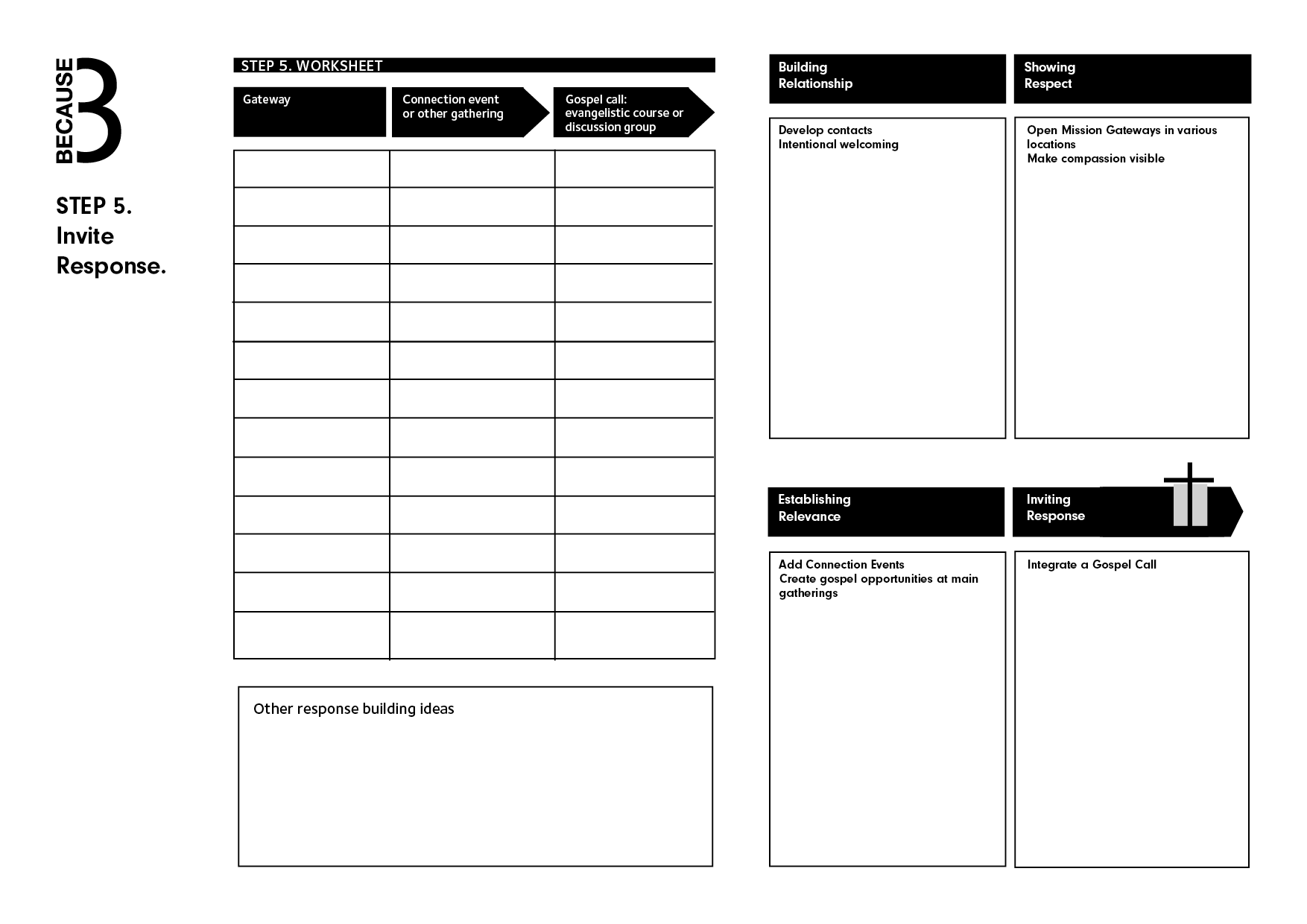
Click image to download worksheet